Key signature chart
Each key signature belongs to a major key and its relative minor. Tap a key to hear its major scale.
No sharps or flats, and the sharp keys
C major A minor
No sharps or flats
G major E minor
1 sharp: F♯
D major B minor
2 sharps: F♯ C♯
A major F♯ minor
3 sharps: F♯ C♯ G♯
E major C♯ minor
4 sharps: F♯ C♯ G♯ D♯
B major G♯ minor
5 sharps: F♯ C♯ G♯ D♯ A♯
F♯ major D♯ minor
6 sharps: F♯ C♯ G♯ D♯ A♯ E♯
C♯ major A♯ minor
7 sharps: F♯ C♯ G♯ D♯ A♯ E♯ B♯
The flat keys
F major D minor
1 flat: B♭
B♭ major G minor
2 flats: B♭ E♭
E♭ major C minor
3 flats: B♭ E♭ A♭
A♭ major F minor
4 flats: B♭ E♭ A♭ D♭
D♭ major B♭ minor
5 flats: B♭ E♭ A♭ D♭ G♭
G♭ major E♭ minor
6 flats: B♭ E♭ A♭ D♭ G♭ C♭
C♭ major A♭ minor
7 flats: B♭ E♭ A♭ D♭ G♭ C♭ F♭
The order of sharps and flats
Sharps and flats always appear in the same order, so a key with three sharps always has the first three. The flats are the sharps backwards.
Sharps: F C G D A E B
Father Charles Goes Down And Ends Battle
Flats: B E A D G C F
Battle Ends And Down Goes Charles' Father
How to name a key
No sharps or flats is C major or A minor. For every other key, two quick rules give you the major key, and the minor comes from it.
Sharp keys
The last sharp is the seventh note of the scale, so go up one half step. Three sharps end on G♯, so the key is A major.
Flat keys
The second to last flat is the key. B♭ E♭ A♭ is E♭ major. One flat has no second to last, so learn it by heart: F major.
The relative minor
It's three half steps below the major key: G major and E minor share one sharp. To tell which one a piece is in, listen to it. A player app like Sheet Music plays a scanned page back for you.
The circle of fifths
Going clockwise from C, each key is a fifth higher and adds one sharp. Going the other way, each key is a fifth lower and adds one flat.
At the bottom the two sides meet: F♯ major and G♭ major sound the same, written two ways. The relative minor of each key sits just inside it.
Tap a key to hear its scale.
Practice: name the key
A key signature appears on the staff. Pick its major key.
Which major key is this?
Right 0 of 0 · Streak 0
Hear a piece in its key
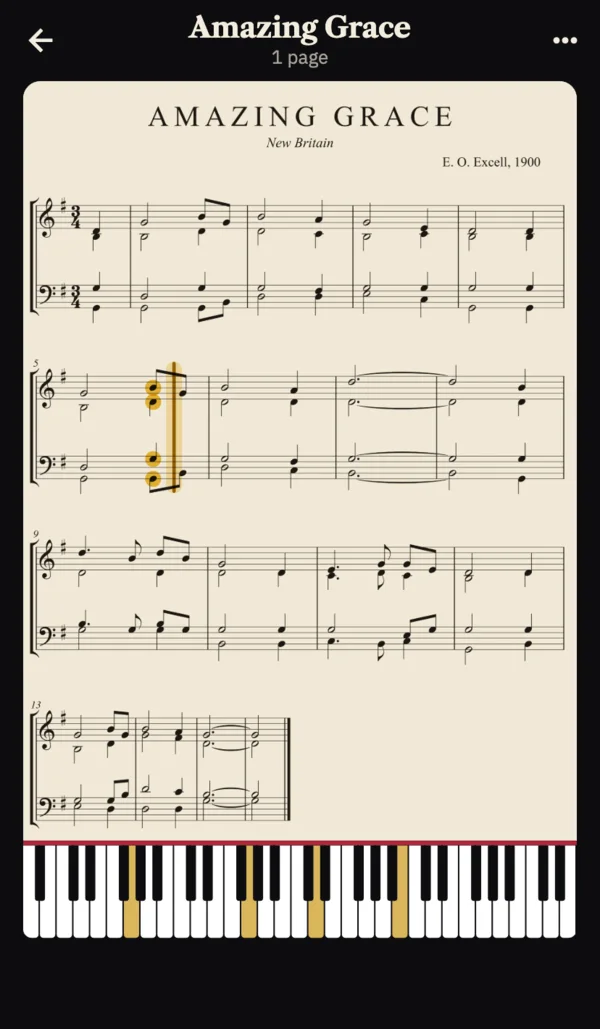
Sheet Music reads a printed page with your phone camera and plays it back, sharps and flats included, with a cursor moving along your own page. Free for iPhone and Android.


Questions
How many key signatures are there?
There are 15: C major with no sharps or flats, seven with sharps and seven with flats. Each one is shared by a major key and its relative minor, so together they cover 30 keys.
What key has one sharp?
G major, or its relative minor, E minor. The sharp is F sharp.
What key has one flat?
F major, or its relative minor, D minor. The flat is B flat.
What is the order of sharps and flats?
Sharps always come in the order F, C, G, D, A, E, B. Flats are the same letters backwards: B, E, A, D, G, C, F.
How can you tell if a piece is major or minor?
The key signature is the same for both, so look at the music. A minor piece often starts or ends on the minor key note, and the seventh note of the minor scale is often raised, like G sharp in A minor.