Shelf life by food
| Canned food | Type | Unopened, in the pantry | Opened, in the fridge |
|---|---|---|---|
| High-acidTomatoes Diced, crushed, whole | High-acid | 12–18 months | 5–7 days |
| High-acidTomato sauce and paste | High-acid | 12–18 months | 5–7 days |
| High-acidTomato soup | High-acid | 12–18 months | 5–7 days |
| High-acidFruit juice Tomato, orange, grapefruit, lemon, lime | High-acid | 12–18 months | 5–7 days |
| High-acidPineapple | High-acid | 12–18 months | 5–7 days |
| High-acidPeaches, pears and plums | High-acid | 12–18 months | 5–7 days |
| High-acidMixed fruit and fruit cocktail | High-acid | 12–18 months | 5–7 days |
| High-acidApplesauce and apples | High-acid | 12–18 months | 5–7 days |
| High-acidBerries | High-acid | 12–18 months | 5–7 days |
| High-acidGrapefruit | High-acid | 12–18 months | 5–7 days |
| High-acidPickles | High-acid | 12–18 months | 5–7 days |
| High-acidSauerkraut | High-acid | 12–18 months | 5–7 days |
| Low-acidBeans Black, kidney, chickpeas, green beans | Low-acid | 2–5 years | 3–4 days |
| Low-acidCorn | Low-acid | 2–5 years | 3–4 days |
| Low-acidPeas | Low-acid | 2–5 years | 3–4 days |
| Low-acidCarrots | Low-acid | 2–5 years | 3–4 days |
| Low-acidPotatoes | Low-acid | 2–5 years | 3–4 days |
| Low-acidSpinach | Low-acid | 2–5 years | 3–4 days |
| Low-acidBeets | Low-acid | 2–5 years | 3–4 days |
| Low-acidPumpkin | Low-acid | 2–5 years | 3–4 days |
| Low-acidSoup All kinds except tomato | Low-acid | 2–5 years | 3–4 days |
| Low-acidBroth and stock | Low-acid | 2–5 years | 3–4 days |
| Low-acidStew and chili | Low-acid | 2–5 years | 3–4 days |
| Low-acidPasta in sauce Spaghetti and noodle products | Low-acid | 2–5 years | 3–4 days |
| Low-acidChicken and other poultry | Low-acid | 2–5 years | 3–4 days |
| Low-acidCanned meat Beef, pork, corned beef | Low-acid | 2–5 years | 3–4 days |
| Low-acidHam Shelf-stable cans only | Low-acid | 2–5 years | 3–4 days |
| Low-acidTuna, salmon and sardines | Low-acid | 2–5 years | 3–4 days |
| Low-acidCoconut milk | Low-acid | 2–5 years | 3–4 days |
| Low-acidEvaporated and condensed milk | Low-acid | 2–5 years | 3–4 days |
| Home-cannedHome-canned food Boil before eating, see below | Home-canned | 12 months | 3–4 days |
No match in the chart. Tomato-based and fruit cans follow the high-acid times. Vegetables, beans, meat and fish follow the low-acid times.
Times are for best quality, in a cool, dry pantry. Cans labeled "Keep refrigerated", like some hams and seafood, are not shelf-stable: follow the label.
Why acid makes the difference
The food inside a can slowly reacts with the can itself. Acidic foods like tomatoes and fruit do it faster, so their taste and texture start to change after about a year and a half. Low-acid foods like vegetables, beans and meat react slowly and keep their quality for years.
The date printed on a can is a quality date, not a safety cutoff. Food from an undamaged can that was stored well doesn't turn unsafe the day after, but it slowly loses flavor, texture and nutrients. Use the oldest cans first.
When to throw a can away
Whatever the date says, don't open or taste food from a can that is:
- Bulging or swollen at the ends
- Leaking or sticky on the outside
- Rusted, especially along the seams
- Deeply dented, deep enough to lay a finger in, or dented on a seam
Also throw it out if liquid spurts out when you open it, or the food smells off, foams or shows mold.
How to store canned food
- Keep cans somewhere cool and dry. Below 85°F (29°C) is best.
- Heat above 100°F (38°C) harms canned food, so not above or beside the stove, not under the sink, and not in a damp garage or basement.
- Put new cans at the back and use the older ones first.
- Check the shelf every few weeks for cans that have been there a while, or scan them into Pantry Inventory, which reminds you before the date.
After opening
Leftovers can go in the fridge in their can, but they keep their taste better in a covered glass or plastic container. Use high-acid food within 5–7 days and low-acid food within 3–4 days.
Home-canned food
Use home-canned food within 12 months. Before eating, boil high-acid foods for 10 minutes and low-acid foods for 20 minutes. Once opened, keep them in the fridge for 3–4 days.
Know which cans to use first
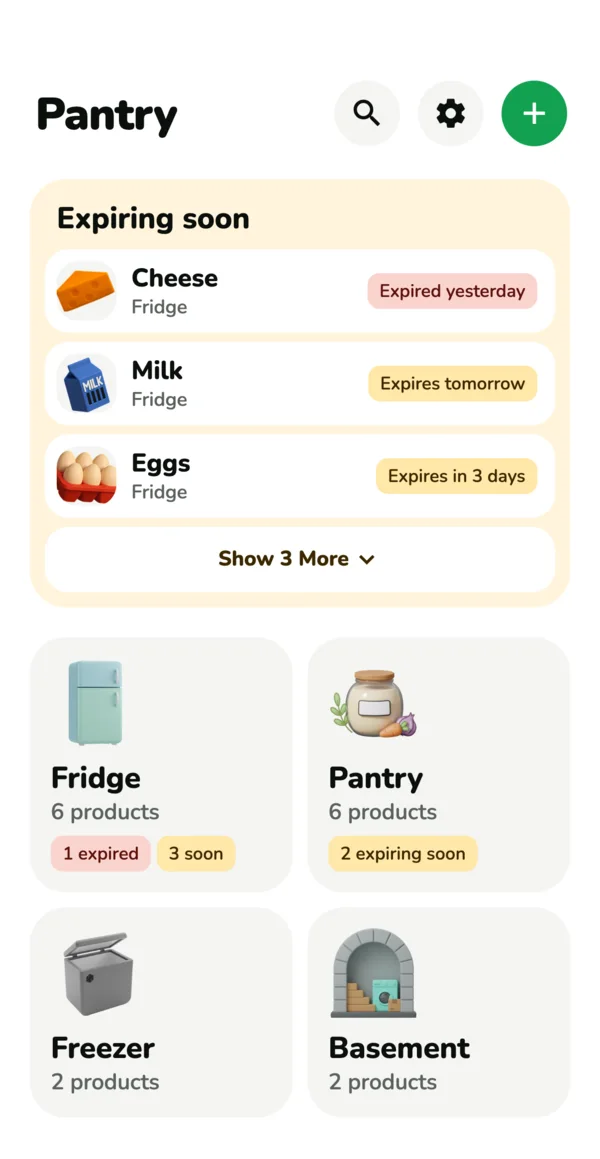
Pantry Inventory keeps the dates for you. Scan a can's barcode, set its date, and anything close to expiring shows up at the top of your home screen. Free for iPhone and Android.


Questions
How long does canned food last?
Unopened, high-acid canned food like tomatoes, fruit and juice keeps its best quality for 12 to 18 months. Low-acid canned food like vegetables, beans, soup, meat and fish keeps for 2 to 5 years. Store cans in a cool, dry place for the full time.
Is canned food safe after the best-by date?
The date on a can is about quality, not safety. Food in an undamaged can that was stored somewhere cool and dry doesn't turn unsafe on that date, but its taste, texture and nutrients slowly decline. Throw away any can that is bulging, leaking, rusted or deeply dented, whatever its date.
How long does canned food last in the fridge after opening?
High-acid foods like tomatoes and fruit keep 5 to 7 days in the refrigerator after opening. Low-acid foods like vegetables, beans, soup, meat and fish keep 3 to 4 days.
Can I keep opened food in the can in the fridge?
Yes, leftovers may be refrigerated in the can. For the best taste and quality, move them to a covered glass or plastic container.
How long do home-canned foods last?
Use home-canned food within 12 months. Before eating, boil high-acid foods for 10 minutes and low-acid foods for 20 minutes. Once opened, keep them in the refrigerator for 3 to 4 days.
Times and storage advice follow the U.S. Department of Agriculture's shelf-stable food guidance. When a label says otherwise, follow the label.